

Relevant information
Date: 23 March, 2026
Place: Board Room of the E.T.S.I. de Telecomunicación (Telecommunication Technical School)
Timetable: 11:00-14:30 (see programme below)
Free attendance until full capacity is reached
Students who so request will be issued with a certificate of participation for curricular purposes.
Objective of the day
When we talk about resources, we usually think of water, energy or raw materials. But a city like Malaga manages much more than that: it manages the space we walk through, the heritage we inherit, the talent we train in its universities, the data we generate every time we move and the social links that sustain life in common. They are all resources. And they are all under increasing pressure.
This year, the Telefónica-UMA Chair proposes to broaden the notion of resource management. 81 % of the Spanish population already lives in urban environments where land is finite, mobility is congested, cultural heritage competes with tourist pressure and the digital empowerment of citizens determines who participates in the society of the future and who is left out. In this context, new generation technologies - 5G, artificial intelligence, Internet of Things, extended reality - are not an end in themselves, but tools at the service of an essential question: How can we do more and better with what we already have?
Managing resources means optimising a water distribution network, yes, but also redistributing the flow of visitors so that the historic centre does not become exhausted; it means training thousands of people in digital skills so that talent is not an exported resource but reverts to the territory; it means opening up public data so that evidence, and not intuition, guides collective decisions.
And there is a tension running through this whole debate: every sensor that measures, every server that processes, every device that connects will, sooner or later, become waste. The same technology that allows us to better manage resources generates a material footprint of its own - electronic components, critical minerals, data centre energy consumption - that will double in less than a decade. Recognising this paradox is not an obstacle, but the starting point for truly responsible management: simulate before building, virtualise before manufacturing, reuse data before extracting new data, extend the life of what already exists.
This edition of Agora Day invites institutional decision-makers, researchers, students and technology professionals to think together about how new generation technologies can become allies of a smarter, fairer and more aware of their own limits resource management.
Prototypes and immersive reality projects
Mobilenet (Mobile & Aerospace Networks Lab) is a research unit of the University Institute of Telecommunication Research of the University of Malaga (‘TELMA’) focused on the application of AI to mobile, aerospace and IoT network management, as well as the development of solutions for health and social welfare. In this session we will explore applications of AI for the intelligent management of satellite networks, robotic platforms and health, through the use of general purpose equipment to provide communication and computational capabilities, while reducing energy consumption.
Radicular is a mixed reality and immersive experience that invites the visitor to feel, from the body, what it means to exist in connection. The piece proposes a sensorial experience of the interdependence between forms of plant, artificial and human intelligence. In the context of this conference, Radicular speaks of another form of resource management based on the recognition of interdependencies. Radicular speaks of what is lost when the relationships between the technological, the human and the living break down. Faced with the logic of extraction and fragmentation, this experience affirms another possibility: a future where all forms of existence recognise, communicate with and care for each other.
Radicular is part of a transmedia narrative based on the speculative fiction novel. Membrane (Jorge Carrión, 2021) and the exhibition project From them (humans) to us (AIs), The project, produced by Art History students at the University of Malaga in 2025 as part of a collaboration between the Telefónica-UMA Chair and the Vice-rectorate for Culture of the University of Malaga.
Radicular is a project of the Telefónica-UMA Chair and XRC Experiencias Inmersivas.
On this day of ÁGORA we will be visited by
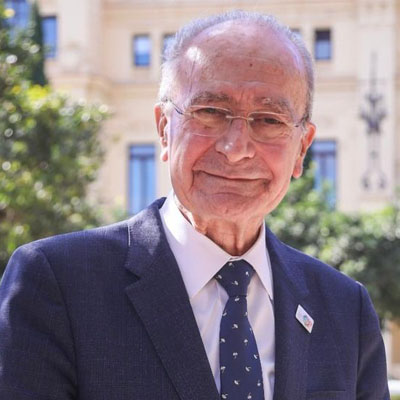
D. Francisco de la Torre Prados
Mayor of Malaga
Born in Malaga in 1942, he holds a degree in Sociology from the Pontifical University of Salamanca and a PhD in Agricultural Engineering from the University of Madrid. Mayor of Malaga since 2000, he has been re-elected six times, obtaining an absolute majority in 2023. Previously, he was President of the Provincial Council of Malaga, Minister of Economy of the first Pre-Autonomous Government of Andalusia, and Member of Parliament and Senator. Under his mandate, Malaga has consolidated its position as a European cultural, technological and tourist reference. He has been awarded the French Legion of Honour, the Distinction of the Minister of Foreign Affairs of Japan and the Hon OBE of the United Kingdom.
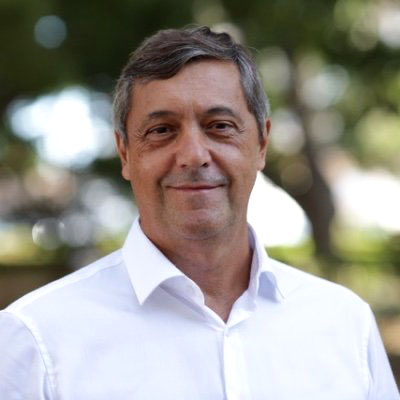
Mr. J. Teodomiro López Navarrete
Rector of the University of Malaga
He holds a degree in Chemical Sciences and a PhD in Physical Chemistry from the University of Malaga, and did research stays at the Politecnico di Milano. Professor of Physical Chemistry since 2008, he has led more than 50 research projects and has led a group specialising in organic materials for molecular electronics since 1991. He was Vice-Rector for Research and Transfer between 2016 and 2023, and was appointed Rector Magnificus of the University of Malaga in January 2024.
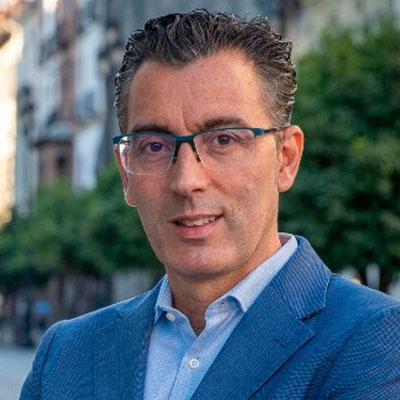
Mr Joaquín Segovia Alonso
Southern Territorial Director Telefónica Spain
He joined the Telefónica Group in 1993 and has developed his career for more than thirty years in Andalusia and Extremadura, leading teams in various territorial areas. He was director of Telefónica in Extremadura for more than five years and later headed the area of Business and Public Administrations in the Southern Territory, a responsibility he extended until assuming the Southern Territorial Management in 2018. He has promoted public-private collaboration programmes and holds university chairs with the main universities in southern Spain.
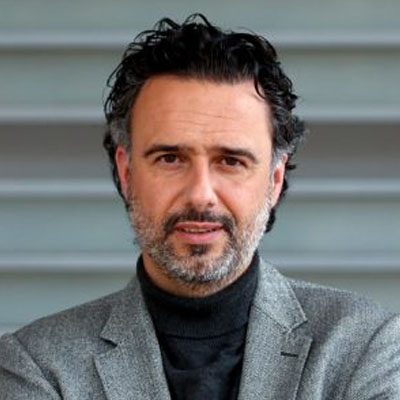
D. Raúl Jiménez Jiménez
Managing Director of the Digital Agency of Andalusia
Telecommunications Engineer from the University of Malaga and Executive Master in Business Administration and Management from ESESA. He has been Deputy Mayor for Social Rights at Malaga City Council and Managing Director of the Agricultural and Fisheries Management Agency of Andalusia. Appointed Managing Director of the Digital Agency of Andalusia in April 2021, he now leads a team of more than a thousand professionals with a budget of almost 493 million euros for 2026 and a planned investment of 2,600 million until 2030 for the digital transformation of Andalusia.
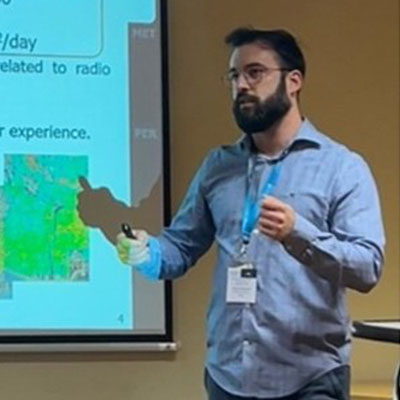
Joaquín Sánchez
Group researcher MobileNet of the TELMA Institute at the University of Malaga, a leader in research on the management of mobile and aerospace communications networks using artificial intelligence, with a special focus on 5G and 6G technologies. tensa His work covers the application of AI to satellite networks, robotic platforms and solutions for health and social welfare.
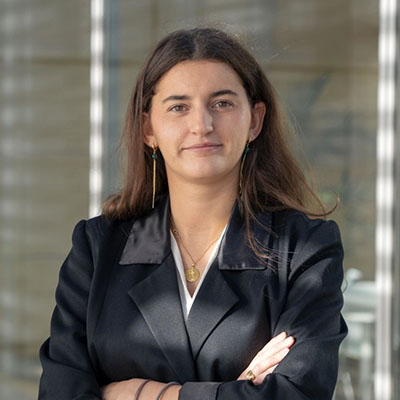
Elena Gómez-Cambronero Gutiérrez de Cabiedes
Product Manager at Telefónica Tech since 2023, with a background in Law and Business Analytics from Universidad Pontificia Comillas (ICADE) and previous experience in IoT and Big Data projects in the same company. He leads the development of products aimed at smart spaces, combining advanced connectivity, data analytics and Internet of Things to transform physical environments into more efficient, safe and sustainable spaces. Your profile combines strategic business vision with technical knowledge applied to the digital transformation of cities and buildings.

IAPH - Andalusian Historical Heritage Institute
The Andalusian Historical Heritage Institute is a public institution attached to the Ministry of Tourism, Culture and Sport of the Regional Government of Andalusia, dedicated to cultural heritage since its foundation in 1989 and accredited as a research institute since 2011. Its activity comprehensively covers research, documentation, conservation, restoration, training and dissemination of Andalusian cultural heritage. With its headquarters in the Cartuja Monastery in Seville, the IAPH is a national and international benchmark in the application of advanced technologies to the study and preservation of historical and cultural heritage.
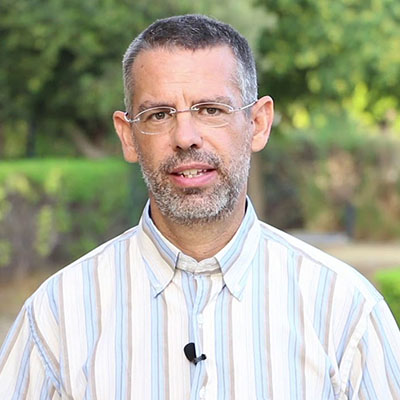
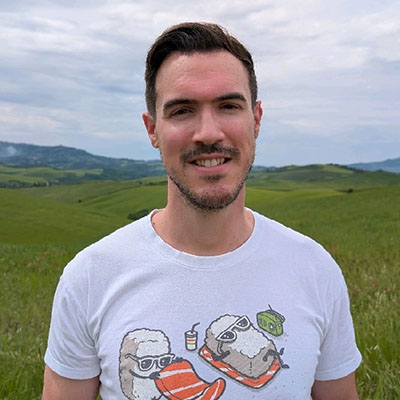
Javier Hormigo Aguilar and Francisco Castro Payán
Javier Hormigo Aguilar is University Professor in the Department of Computer Architecture at the University of Malaga since 2020, PhD in Telecommunications Engineering and specialist in hardware architectures and advanced numerical formats for efficient computing systems.
Next to Francisco Castro Payán, a researcher at the University Institute for Research in Mechatronics and Cyber-Physical Systems (IMECH.UMA), is leading the REACT4GRAINS project, the only project awarded to the UMA in the national call for Research Projects in Artificial Intelligence 2025. The project has a funding of 353,750 euros and has a duration of three years, with the aim of designing customised numerical formats and reconfigurable hardware architectures capable of significantly reducing the energy consumption of artificial intelligence systems.


Activities
 DATA CULTURE: navigating the complexity of cultural systemsDecember 6, 2025 - 17:26
 The Year of the Serpent, an expanded theatrical experience21 July, 2025 - 19:18
 STEAM-H debate. Does technology have the capacity to perfect the human species?7 May 2025 - 10:30 a.m.