The Ágora Telefónica Conference debates the impact of technologies on the performing and musical arts
Last Thursday, 28th November, the new Telefónica Agora Conference took place at the E.T.S. of Telecommunications Engineering of the University of Malaga.
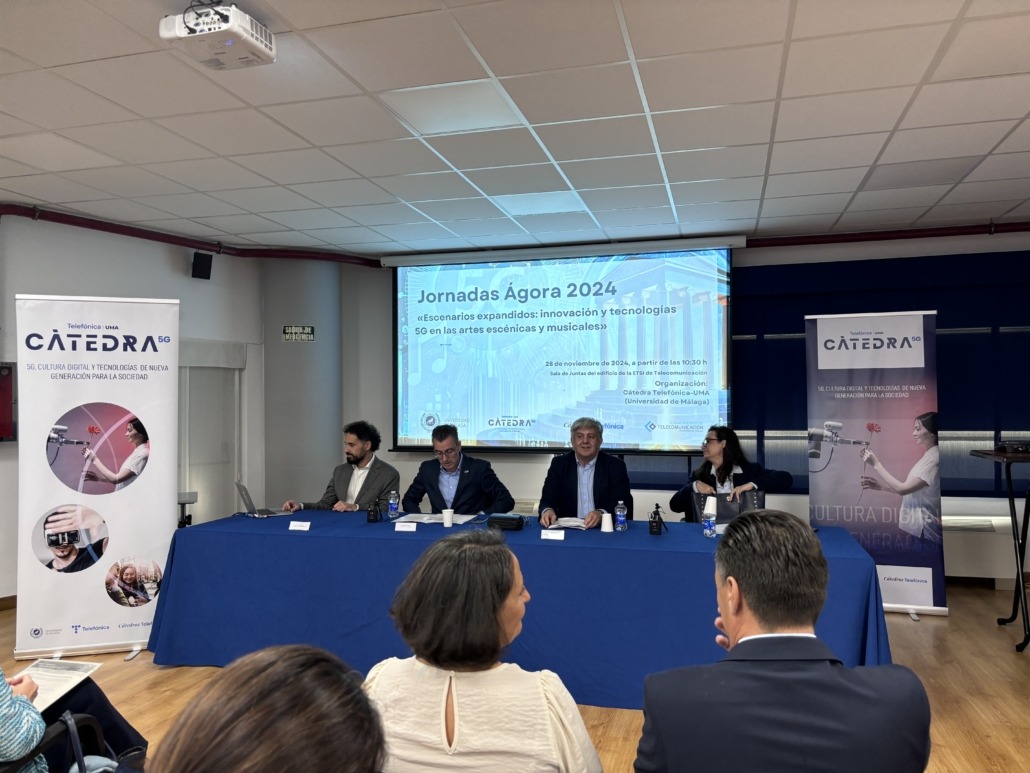
Ágora Telefónica is presented as a space dedicated to debate and critical exploration of the relationships established between society and new technologies. The Telefónica-UMA Chair «5G, digital culture and new generation networks for society» has organised this conference, entitled «Expanded scenarios. Innovation and 5G technology in the performing and musical arts».
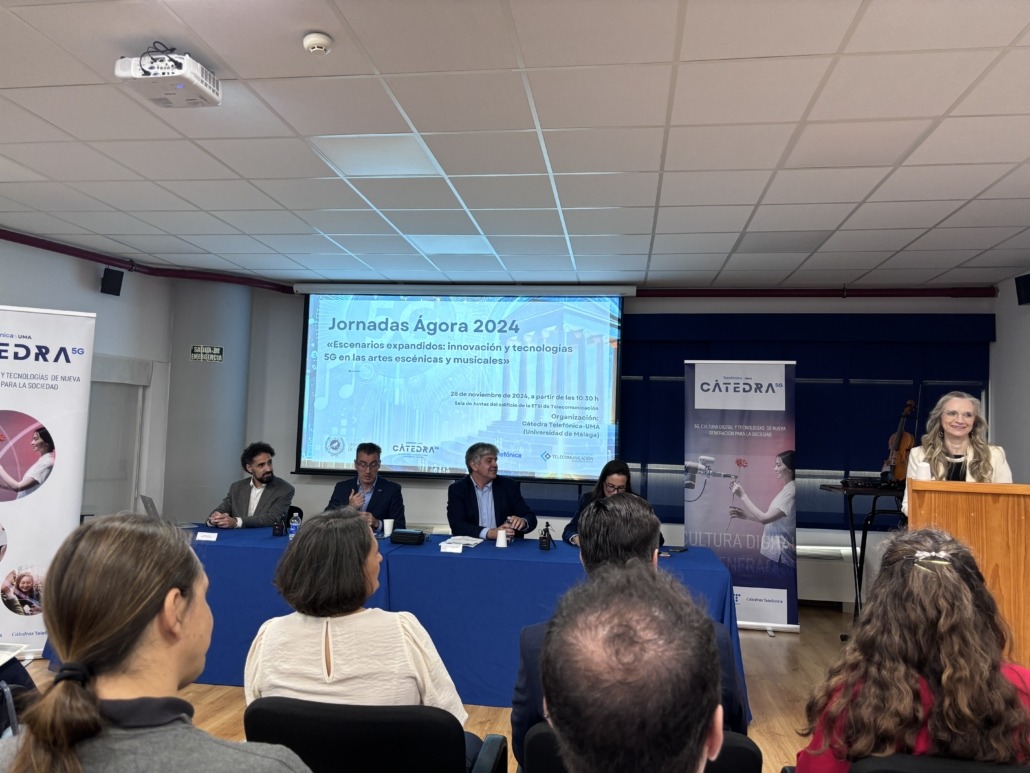
Inaugurated by the Vice Rector for Communication, Cabinet and University Projection, Francisco Paniagua; by the Southern Territorial Director of Telefónica Spain, Joaquín Segovia; and by the Provincial Secretary General of the Territorial Delegation of Educational Development and Vocational Training and University, Research and Innovation in Malaga, María Jesús Vera, the aim of the meeting was to analyse how emerging technologies, such as 5G connectivity, immersive experiences or the streaming are transforming the performing arts and music scene.
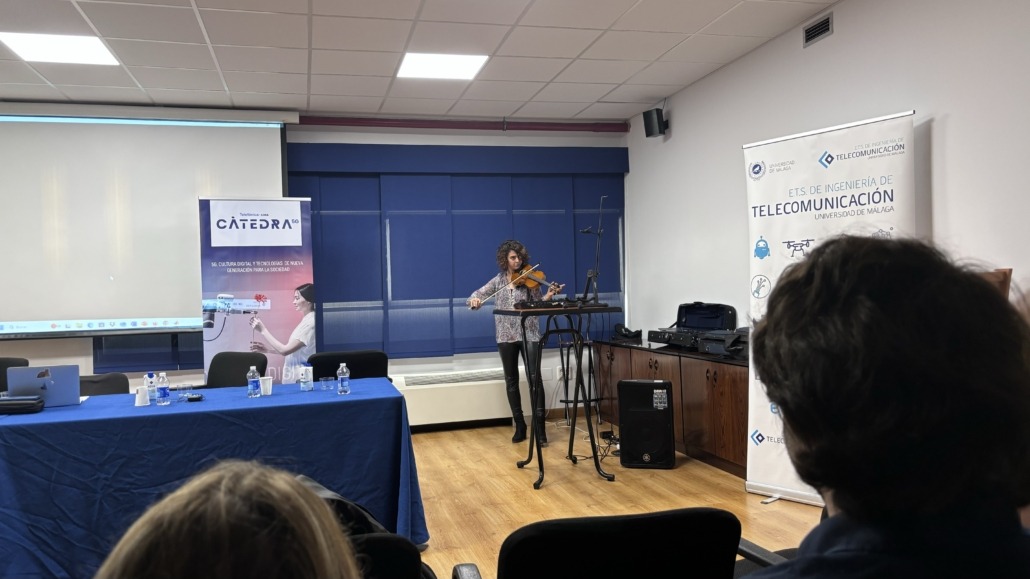
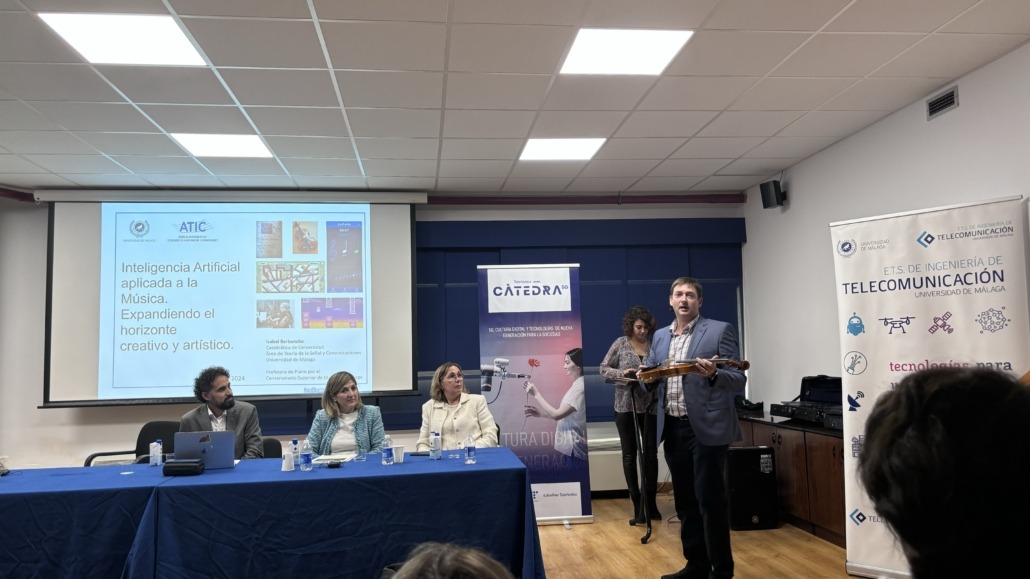
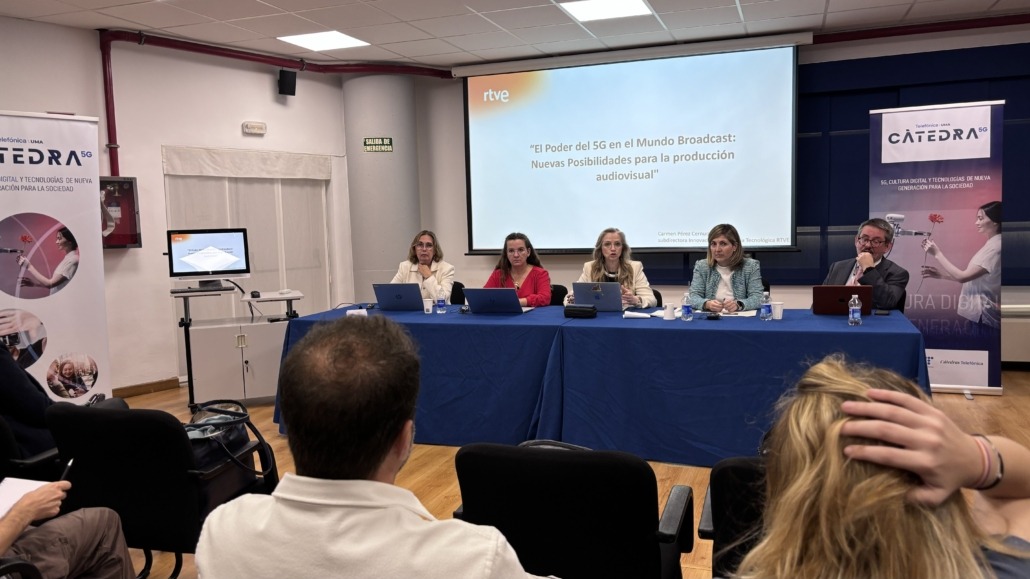
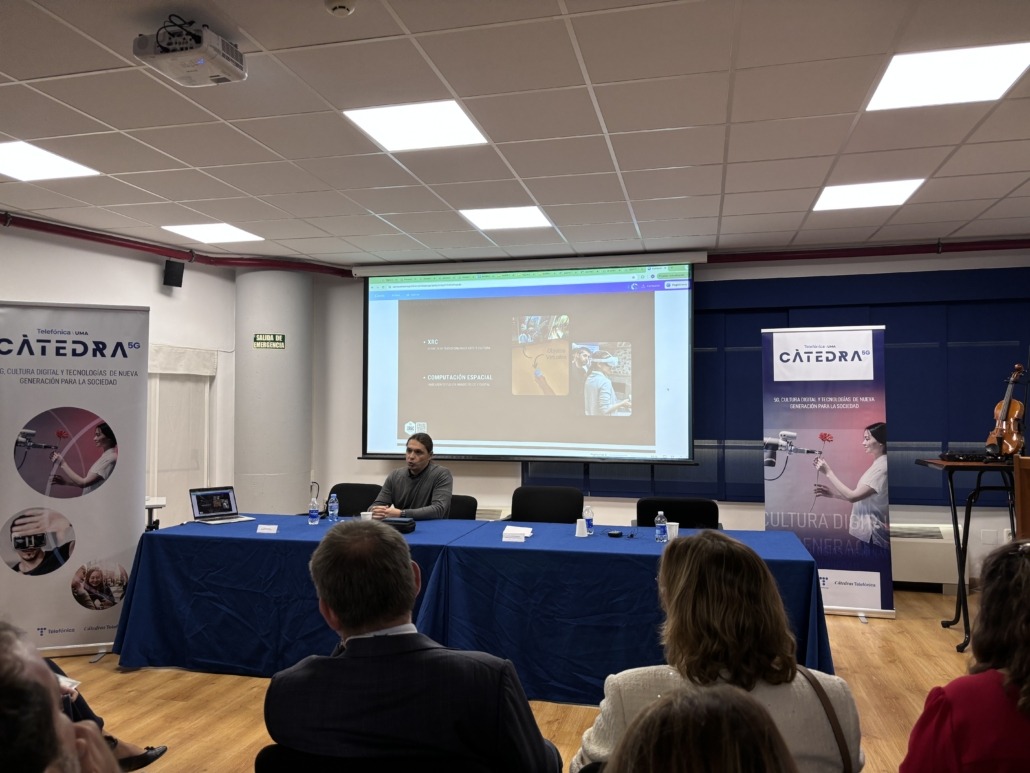
To begin with, Isaac Jiménez, CEO of XRC Immersive Experiences, analysed how immersive experiences can help us to understand different subjects much better through direct contact with them. For example, studying Roman law not from a book, but by placing yourself in Imperial Rome and attending a real trial through a virtual simulation. He then went on to speak on Carmen Pérez, The event was attended by the Deputy Director of Innovation and Technological Strategy of RTVE, with a presentation dedicated to the impact of 5G on audiovisual production and what kind of technologies are being developed for it to have a continuous presence. Esther Arellano, Telefónica's Mobile Devices Technology manager, presented an experience they carried out hand in hand with pianist Lang Lang at the Liceu in Barcelona, in which technology and art merged in a unique concert, where holograms, drones and technology provided a unique experience for the entire audience. The concert followed, Álvaro Torrente, Director of the Complutense Institute of Musical Sciences (UCM), presented the technological innovations applied to musical studies that are being developed at the Complutense Institute of Musical Sciences and how these represent not only an advance in research related to musical studies, but also an improvement in the work carried out by orchestras, professionals and students of musical studies. Finally, Isabel Barbacho, Professor of Telecommunication Engineering (UMA), has examined how her project on musical innovation in the field of technology has developed from the implementation of multiple actions: development of didactic applications, software musical recognition and the construction of «technologised» instruments, among other innovations. To bring this programme to a close, the first violin of the Orquesta Filarmónica de Málaga, Anna Milman, has performed two pieces with the technological violin designed by Isabel Barbancho and her team.
«In these times of accelerated technological change, the Humanities acquire renewed relevance [...] at the UMA, dialogue between disciplines is key to addressing the challenges of the present and the future, and this involves integrating the rigour of the Sciences and Technologies with the critical and ethical reflection of the Social Sciences and the Humanities». Francisco Paniagua
The Telefónica-UMA Chair would like to thank all the speakers and institutional representatives for their participation, as well as a large group of UMA students and researchers who attended and enjoyed the meeting.
We would also like to thank all the media that have covered the event: